
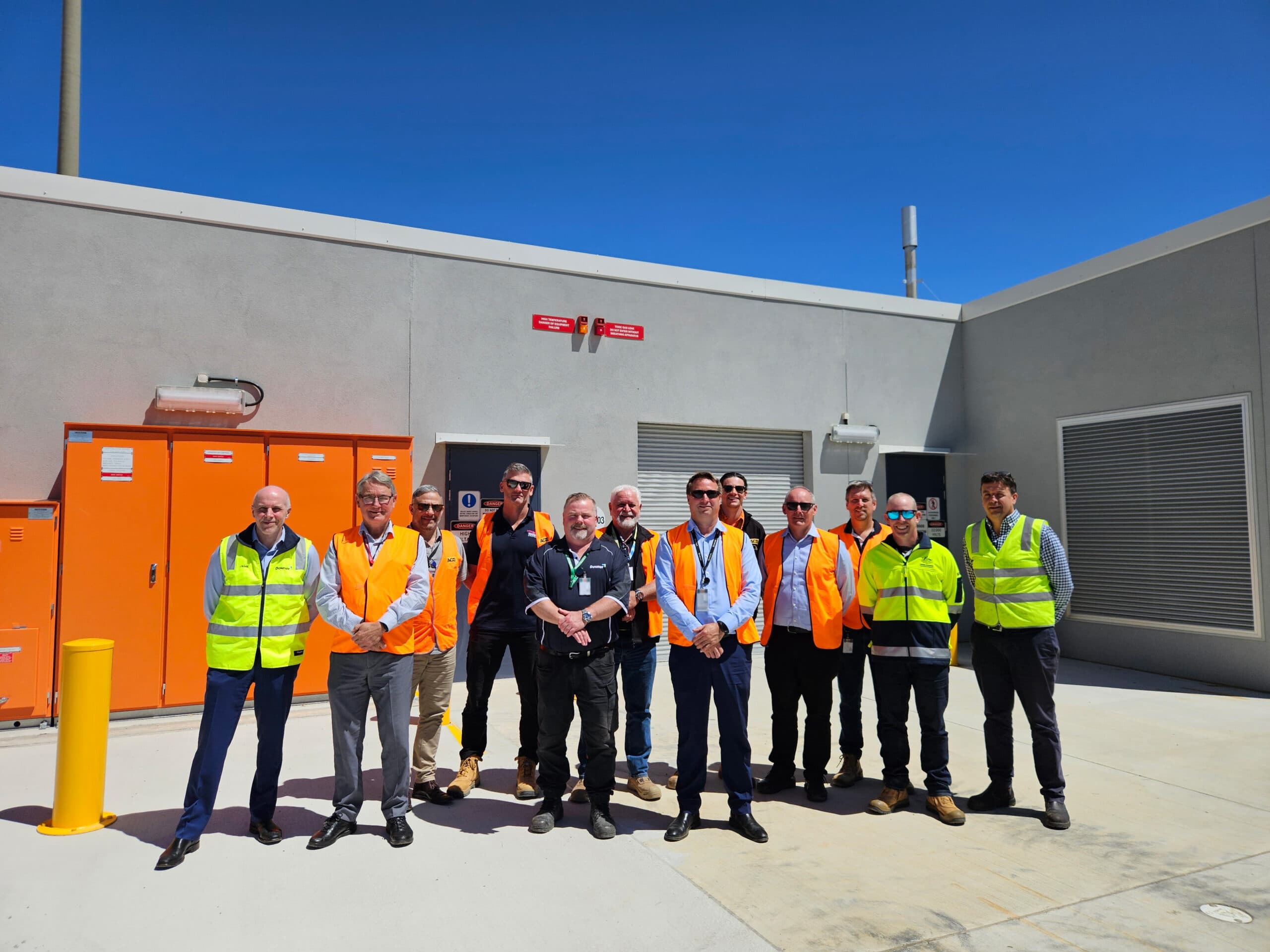
Project overview
Downer delivered a major High Voltage (HV) and Low Voltage (LV) network upgrade at a government-owned, contractor-operated site spanning regional Victoria and NSW – within a live explosive ordnance precinct where safety, access and operational continuity were tightly controlled.
The project involved installing 2.3 kilometres of HV network cabling, alongside new kiosk transformers, a transformer substation, LV infrastructure, emergency generation and a communications network. The upgrade improved network redundancy, enabled isolation of HV sections without impacting LV supply, and reduced ongoing maintenance requirements.
While technically complex, the real challenge lay in delivering the works within a highly constrained operational environment, without disrupting site production.
The challenge
This was not a conventional infrastructure project.
Works were undertaken within a live explosive precinct, where strict safety requirements, exclusion zones and operational priorities governed when and how access could occur. Construction activities were required to take place outside production hours, initially within short overnight windows, leaving limited time to mobilise, execute and demobilise each shift.
Every activity required precise coordination. Crews, materials, permits and equipment all needed to align with tightly controlled access periods, with little tolerance for delay or disruption. Works could not simply continue beyond agreed windows, requiring a disciplined approach to sequencing and delivery.
The project also had to be delivered alongside ongoing site operations, where explosive ordnance production remained the priority. This meant the construction program was, at times, driven by explosive ordnance production, requiring continuous coordination to ensure progress could be made without impacting day-to-day activities.
Regional delivery conditions added further complexity. Specialist resources were less readily available, mobilisation required greater lead time, and material deliveries and subcontractor coordination needed to align with restricted access windows and changing site conditions.
Importantly, the challenge was less about the construction itself and more about working safely and efficiently within an environment defined by risk management, access constraints and operational sensitivity.
The solution
Downer tailored its delivery approach to suit the operational environment, recognising early that planning, flexibility and stakeholder alignment would be critical to success.
Work programs were structured around site access constraints, with adjustments made to shift patterns and sequencing to maximise productivity within available windows. Weekend work and shutdown periods were used strategically to accelerate progress when broader access was available, allowing critical activities to be completed more efficiently than would have been possible during restricted overnight shifts.
Through sustained coordination with site stakeholders, available work windows were increased, improving productivity while maintaining alignment with operational requirements. Daily engagement enabled the team to respond to changing conditions, manage interfaces and maintain momentum across multiple work fronts.
Where possible, regionally based crews, subcontractors and suppliers were utilised, reducing reliance on long-distance mobilisation and supporting a consistent on-site presence. Works were broken into clearly defined stages, with construction, energisation and handover carefully sequenced to maintain continuity of supply at all times.
Outcomes
The project was delivered safely and without disruption to site operations, despite the constraints of working within a live explosive ordnance environment and highly restricted access conditions.
The completed upgrade strengthened network resilience, improved operational flexibility and reduced the risk of unplanned outages, while modernising critical infrastructure to support ongoing and future requirements.
Just as importantly, the project demonstrates Downer’s ability to deliver complex infrastructure upgrades in environments where success depends not only on construction capability, but on disciplined planning, adaptability and strong stakeholder coordination.
Key outcomes included:
- Delivery within a live explosive ordnance environment with no disruption to operations
- Improved network reliability and resilience
- Greater flexibility to isolate HV network sections without impacting LV supply
- Reduced maintenance requirements through modernised infrastructure
- Effective coordination across multiple stakeholders and operational interfaces.
Discover more View all
A consistent approach to project controls
Project Xenon was established to create a more consistent and...
Read case study
Riverina Redevelopment Program
Project Overview The Riverina Redevelopment Program (RRP) is a transformative...
Read case study

Christchurch Southern Motorway Stage 2
Connecting Canterbury through safer, more reliable transport infrastructure Overview Christchurch...
Read case study