From Bigger, Better Trains to a greener future: how Downer is supporting rail decarbonisation
At Downer, we’re supporting a more sustainable future for Australia’s rail network by embedding emissions reduction into the way we design, build, and operate fleets and depots - starting with the High Capacity Metro Trains (HCMT) project in Victoria.
As Australia’s leading provider of rollingstock asset management, we’re applying real-world insights from HCMT to inform sustainability practices across our national rail footprint. We’re also working closely with our customers to help them meet growing expectations for low-emission, future-ready transport.
“We want to champion sustainability on behalf of our customers,” said Caitlin Golder, Environment and Sustainability Manager for Rail & Transit Systems. “By embedding decarbonisation into the delivery and maintenance of major rail programs, we can help drive change at scale – across networks, fleets and infrastructure.”
In 2019, we voluntarily adopted the Task Force on Climate-related Financial Disclosures (TCFD), which helped us identify climate risks and opportunities across our operations. Through that process, we committed to net zero Scope 1 and 2 GHG emissions by 2050, a target that’s now embedded in our strategy, planning and decision-making.
The HCMT project has been a cornerstone of our decarbonisation journey.
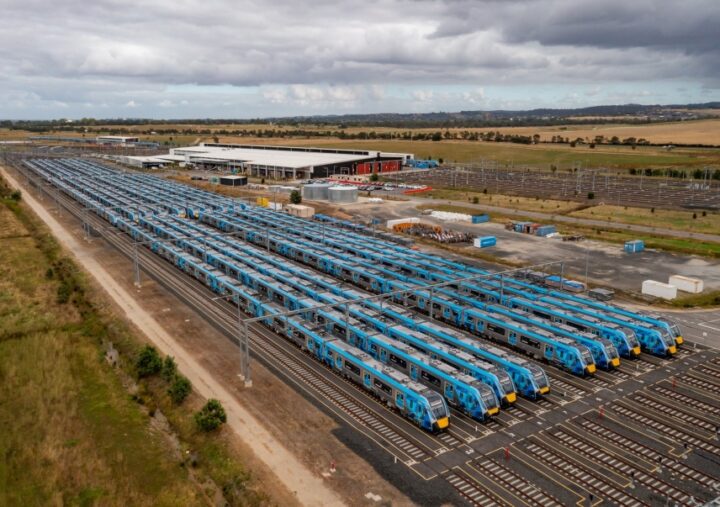
Delivered by the Evolution Rail consortium – comprising Downer, CRRC Changchun and Plenary – the $2.4 billion project delivered 70 of Melbourne’s most modern and accessible trains to the Cranbourne-Pakenham and Sunbury lines. These Bigger, Better Trains will be the only fleet to operate through the new Metro Tunnel when it opens in 2025.
Supporting this fleet is our purpose-built Pakenham East Depot, constructed using 90% local content. In 2022, the depot received the Environmental and Sustainability Excellence Award at the Australasian Rail Industry Awards, recognising its innovative and sustainable design.
HCMT has served as a testbed for how we monitor and model our operational GHG emissions across the lifecycle of a major rail project.
“Over the past six years, we’ve built a detailed understanding of how our activities generate emissions – across both fleet operations and depot environments,” Golder explained. “That data has enabled us to make smarter, more targeted decisions about where and how to reduce our footprint.”
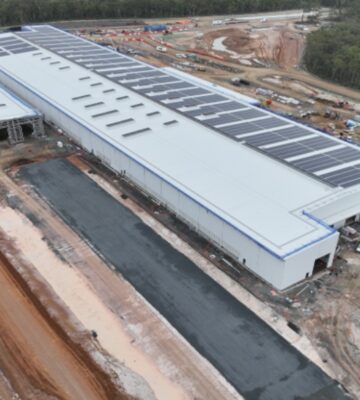
We’re now embedding these learnings across our broader rollingstock operations, including our work on the Queensland Train Manufacturing Program (QTMP).
“HCMT was the starting point, but we’ve since expanded our approach to embed sustainability into our entire rollingstock portfolio,” Golder said. “We’re applying the same methodology – modelling GHG emissions, identifying reduction opportunities, and integrating efficiency measures – across multiple sites and contracts around Australia.”
This includes everything from energy optimisation and operational improvements to infrastructure design, asset management, and long-term maintenance strategies.
“Scalability has been key,” said Golder. “The systems and insights we developed on HCMT are now influencing decisions at dozens of our depots and stabling yards nationwide. It’s helping us – and our customers – future-proof operations in the face of rising climate expectations.”
As Melbourne prepares for the opening of the Metro Tunnel, HCMT’s impact goes far beyond the tracks it will run on. For us, it marks a major milestone in our broader decarbonisation journey – and a model for what’s possible across the rail sector.
“This is about setting the foundations for lasting change,” Golder said. “It’s not just about individual projects – it’s about reshaping how the industry thinks about sustainability at every level.”