
The New Zealand Infrastructure Resilience Index
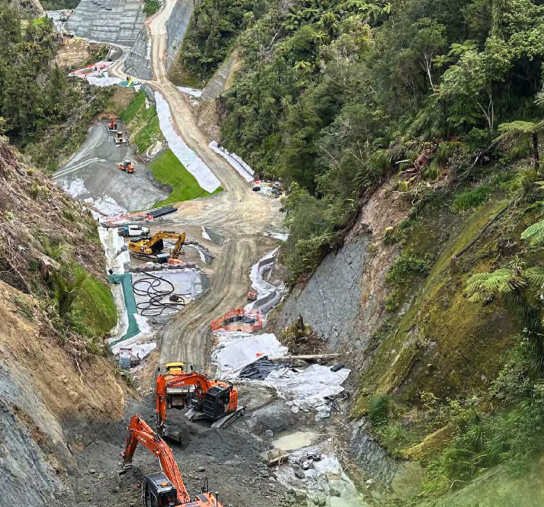
Measuring how well New Zealand’s infrastructure can withstand and recover from shocks.
Building a Resilient New Zealand
Downer, in partnership with the New Zealand Institute of Economic Research (NZIER), has created the Infrastructure Resilience Index, a data-driven tool that tracks how resilient our essential infrastructure really is.
Why Resilience Matters
New Zealand’s infrastructure underpins every part of our daily life from keeping the lights on and roads open, to ensuring clean water and reliable connectivity.
But as climate events intensify, assets age, and networks become more interdependent, resilience can’t be taken for granted.
The Infrastructure Resilience Index (IRI) provides a national baseline for how well our systems can absorb shocks and recover from stresses and where investment will make the biggest difference.
About the Index
The Index measures resilience across four critical lifeline sectors:
- Electricity
- Roading
- Telecommunications
- Water
Each sector is weighted according to how much other systems depend on it, with electricity carrying the highest weighting.
The Index provides a quantitative, comparable framework to:
- Identify vulnerabilities in infrastructure systems at both national and regional levels.
- Show where investment will have the greatest impact on resilience.
- Shift from reactive repairs to proactive maintenance and system-wide planning.
- Support government, councils, iwi, and partners in advocating for better infrastructure investment.
About the Barometer
Tracking resilience over time.
The Infrastructure Resilience Barometer benchmarks performance against 2021, showing whether resilience is improving or declining nationwide.
In 2025, the Barometer score sits at –9, reflecting a measurable decline since 2021 mainly due to constraints in electricity supply and road network condition. These issues highlight the growing risk of disruption to communities, economies, and essential services.
Key Insights from 2025
- Resilience is uneven across regions – some networks are far more vulnerable than others.
- Maintenance and renewals are the single biggest enablers of resilience.
- Equity matters – areas of higher deprivation tend to have lower resilience, leading to longer recovery times after shocks.
- Electricity and roads remain the backbone. When they fail, everything else follows.
- Proactive planning outperforms reactive repairs every time.
Resilience isn’t just an engineering challenge; it’s a wellbeing issue.
Stronger, smarter infrastructure helps communities recover faster, keeps essential services running, and builds confidence in the systems that support us all.
Partnership for Progress
“The Index supports the shift from reactive investment to proactive maintenance and from isolated projects to coordinated, system-wide planning.”
— Murray Robertson, Managing Director – New Zealand, Downer
“The Index offers an independent, data-based foundation for better decisions across government, business, and communities.”
— Christina Leung, CEO, NZIER
FAQs
1. How is the Index different from other infrastructure assessments?
It’s regional, cross-sector, and weighted for interdependencies. It also pairs a point-in-time Index with a national Barometer that tracks change over time.
2. What trends has the Barometer revealed?
Resilience has declined since 2021, mainly due to pressures in electricity and road networks showing the urgency for investment in maintenance and upgrades.
3. How does resilience relate to social wellbeing?
Communities with lower infrastructure resilience face longer recovery times and greater disruption to health, jobs, and services. Improving resilience is a pathway to equity.
4. What’s the biggest enabler of resilience?
Maintenance and renewals strengthening what we already have to prevent compounding failures.
5. Can the Index model future scenarios?
Yes. The Index framework allows for “what if” testing like adding local generation or upgrading rural connectivity to forecast resilience improvements.
Download the Report
Get the full Infrastructure Resilience Index 2025 report and see how resilience varies across New Zealand’s regions.

More whitepapers View all

Whitepaper: Future-proofing the aviation sector – Optimising the benefit of Contractor input
This whitepaper reflects on current challenges and emerging opportunities in...
Read case study

Road closures: An operational perspective
The case for increased use of road closures as a...
Read case study

Cost Escalation 2023
Cost escalation has become an worldwide issue, for households, businesses,...
Read case study