| Project | City Rail Link, Auckland |
|---|---|
| Client | City Rail Link Limited/Auckland Transport |
| Delivery model | Early Contractor Involvement and Alliance |
| Downer’s role | Constructor partner, integrated delivery partner, digital engineering contributor, telecommunications delivery partner, long-term maintenance provider |
How Downer has delivered the infrastructure that will move Auckland for generations
Auckland is growing fast. With the city forecast to reach two million people by 2033, its transport network needs to move more people, more often, through an increasingly constrained urban environment.
The City Rail Link is Auckland’s answer to that challenge. More than 100 years in the making, it is the largest transport infrastructure project ever delivered in New Zealand: a 3.45km twin-tunnel railway up to 42 metres beneath some of the city’s busiest, most heritage-sensitive streets, with two new underground stations and two redeveloped stations. It transforms Waitematā from a dead-end into a through-station, doubles Auckland’s rail capacity and has capacity to move up to 54,000 people an hour at peak in the future when fully operationalised
For Downer, it has been a decade-long contribution to one of Aotearoa New Zealand’s most significant infrastructure programmes — from early works in 2016 through to full construction and long-term maintenance.
Downer’s role: from enabling works to long-term operation
Downer has supported the City Rail Link across its full project lifecycle: from early enabling works in Auckland’s city centre, through main construction as a member of the Link Alliance, to the maintenance contract that will help keep the railway safe, reliable and ready for customers for decades to come.
It is a strong example of the Downer in action, bringing together capability from multiple business units to deliver complex work in a live, highly constrained urban environment.
Early works: laying the groundwork (Contracts C1 and C2)
Before major tunnelling could begin, the project faced a critical challenge: how to build new rail infrastructure beneath a busy city while protecting heritage assets, keeping transport moving and minimising disruption for businesses, residents and commuters. Downer played a key role in overcoming this challenge for both C1 and C2 contracts.
C1 — Britomart and the Chief Post Office, 2016 – 2021
Delivered by the Downer Soletanche Bachy Joint Venture, C1 was one of the first major City Rail Link contracts and one of the project’s most complex engineering challenges. The work involved constructing the initial CRL tunnel sections from Waitematā Station (formerly Britomart) to the Downtown Shopping Centre, while refurbishing and protecting Auckland’s 14,000-tonne, Category 1 heritage-listed Chief Post Office (CPO) building.
To create space for the twin rail tunnels, the team excavated around 14 metres beneath the CPO and transferred the weight of the 109-year-old masonry building onto temporary foundations, before permanent reinforced concrete foundations were constructed below. The works were delivered in confined conditions, below sea level and in reclaimed ground, with the Waitematā Harbour immediately nearby.
The scope included diaphragm walls, jet grouting, underpinning structures and basement reconstruction, enabling the station to change from a terminating station into a future through-station. The train station remained operational throughout, with a connecting door separating busy passenger platforms from an active construction site. The contract also included the restoration of the CPO and the creation of Te Komititanga public square on Lower Queen Street.
C2 — Albert Street and Lower Queen Street, 2016 – 2020
As one half of the Connectus joint venture, Downer delivered around 350 metres of cut-and-cover tunnel beneath Albert Street, between Customs Street and Wyndham Street, creating the critical connection between Waitematā Station and the wider tunnel alignment. The works included a 13-metre-wide trench excavated to 18 metres at its deepest point, 362 reinforced concrete piles, four pipe-jacking shafts and two tunnel boring machines for the stormwater pipe-jacking works. Alongside tunnel construction, the team installed 516 metres of new stormwater main, strengthened a 40-metre section of the Ōrākei Main Sewer, and reinstated the streetscape above.
A key part of the work was managing around 250 underground services in the heart of the Auckland city centre, including communications, gas, electricity, water, wastewater and stormwater assets. Live traffic was maintained around and over the trench throughout, requiring dynamic traffic management, careful staging and close coordination with utility providers, businesses, pedestrians and the wider city community.
Together, C1 and C2 demonstrated Downer’s capability in dense urban construction, heritage protection and live-city delivery — experience that carried directly into the main works that followed.
Main works: stations, tunnels, systems
As a Link Alliance construction partner, Downer has delivered civil, structural, architectural and services works across the station boxes, entrances and plant rooms at three new and upgraded stations, as well as the tunnels, tunnel ventilation, fire engineering and track form that connect them.
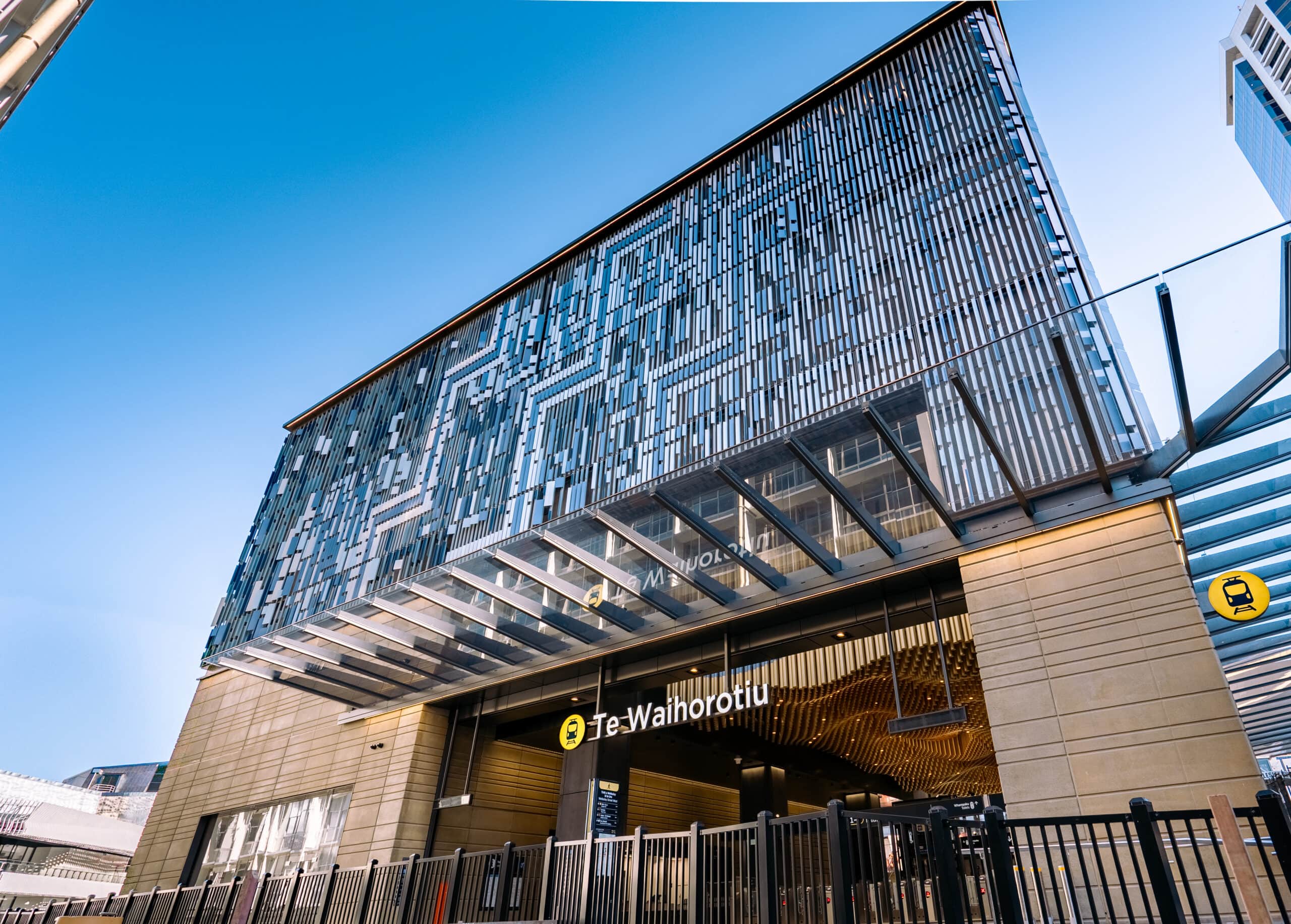
Te Waihorotiu Station: a new 15-metre-deep, 300-metre-long cut-and-cover station built beneath Albert Street in Auckland’s midtown, with entrances on Victoria and Wellesley Streets. Construction involved building a large underground station box in a dense city corridor, managing excavation, structural concrete, plant rooms, tunnel interfaces, utility diversions and reinstatement of the streetscape above. The station links the tunnel boxes from Waitematā Station with the bored tunnels continuing south to Karanga-a-Hape and Maungawhau, while creating the platform and concourse spaces expected to support New Zealand’s busiest railway station.
Karanga-a-Hape Station: the deepest station on the CRL network, and in New Zealand, around 33 metres underground with entrances at Mercury Lane and Beresford Square. Unlike Te Waihorotiu, much of Karanga-a-Hape was delivered as a mined underground station, with twin platform tunnels, access shafts and connecting adits excavated deep below the Karangahape Road ridge. Road-header excavation sprayed concrete support, permanent lining design and complex tunnel junctions all had to be sequenced carefully in constrained ground conditions, while maintaining access and activity above ground in one of Auckland’s busiest urban precincts.
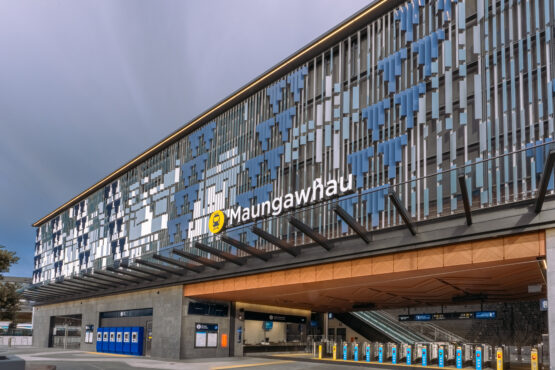
Maungawhau Station: the redeveloped Maungawhau Station (formerly Mt Eden) and an interchange between the CRL connection and the Onehunga West line. Construction combined open-cut works, tunnel box construction, mined tunnel interfaces and extensive rail corridor upgrades to connect the new underground CRL alignment into the live network. The works included new and upgraded platforms, a modern station building, grade-separated rail connections, retaining structures, bridges and access from Ruru Street, Mount Eden Road and New North Road connections, all delivered around the operational constraints of a critical rail corridor.
Tunnels and Western Line (C5): the underground alignment brings together three tunnel types: cut-and-cover tunnel boxes at the city and Maungawhau ends, twin bored tunnels excavated by the Dame Whina Cooper tunnel boring machine (TBM), and mined tunnels at Karanga-a-Hape and Maungawhau Stations. Mined cavern works created complex underground junctions and station interfaces using road-header excavation, sprayed concrete support, waterproofing and permanent concrete lining. At Maungawhau, the works also connect the new CRL tunnels into the existing North Auckland Line through grade-separated rail connections, retaining structures, new road, rail and pedestrian bridges, and major civil works delivered around the constraints of a live rail corridor.
Station fit outs: Hawkins, a Downer company, were a key subcontractor in the delivery of the station fit-outs, including architectural finishes, heating and ventilation, power distribution, station fire systems, escalators and lifts. This is the part of the project passengers will experience every day, and where the Mana Whenua design narrative is expressed through the finished spaces. The end result is a suite of stations that are distinctly Tāmaki Makaurau (Auckland).
You can learn more about the stations and Mana Whenua design narrative here: Māori art in central Auckland
Rail systems: the network’s nervous system
Link Alliance, supported by Downer’s rail engineering and consultancy capability, was responsible for delivering, integrating and testing the rail line’s core systems: signalling, overhead lines, traction power and communications. This technically complex work brings design, construction, verification and commissioning together so the railway can operate safely as one integrated network.


“Downer’s rail engineering and consultancy team has played a key role in bringing together the signalling, communications, power and operational systems needed to safely run a modern underground railway. Seeing the network completed now is a reflection of dedication, technical expertise and collaboration.”


Keeping the city moving underground and above it
At Te Waihorotiu and Karanga-a-Hape, teams managed major utility diversions beneath Albert, Wellesley and Victoria Streets, including water, gas, power and communications. Early investigation, close coordination with network operators and flexible staging helped keep essential services operating while maintaining programme momentum.
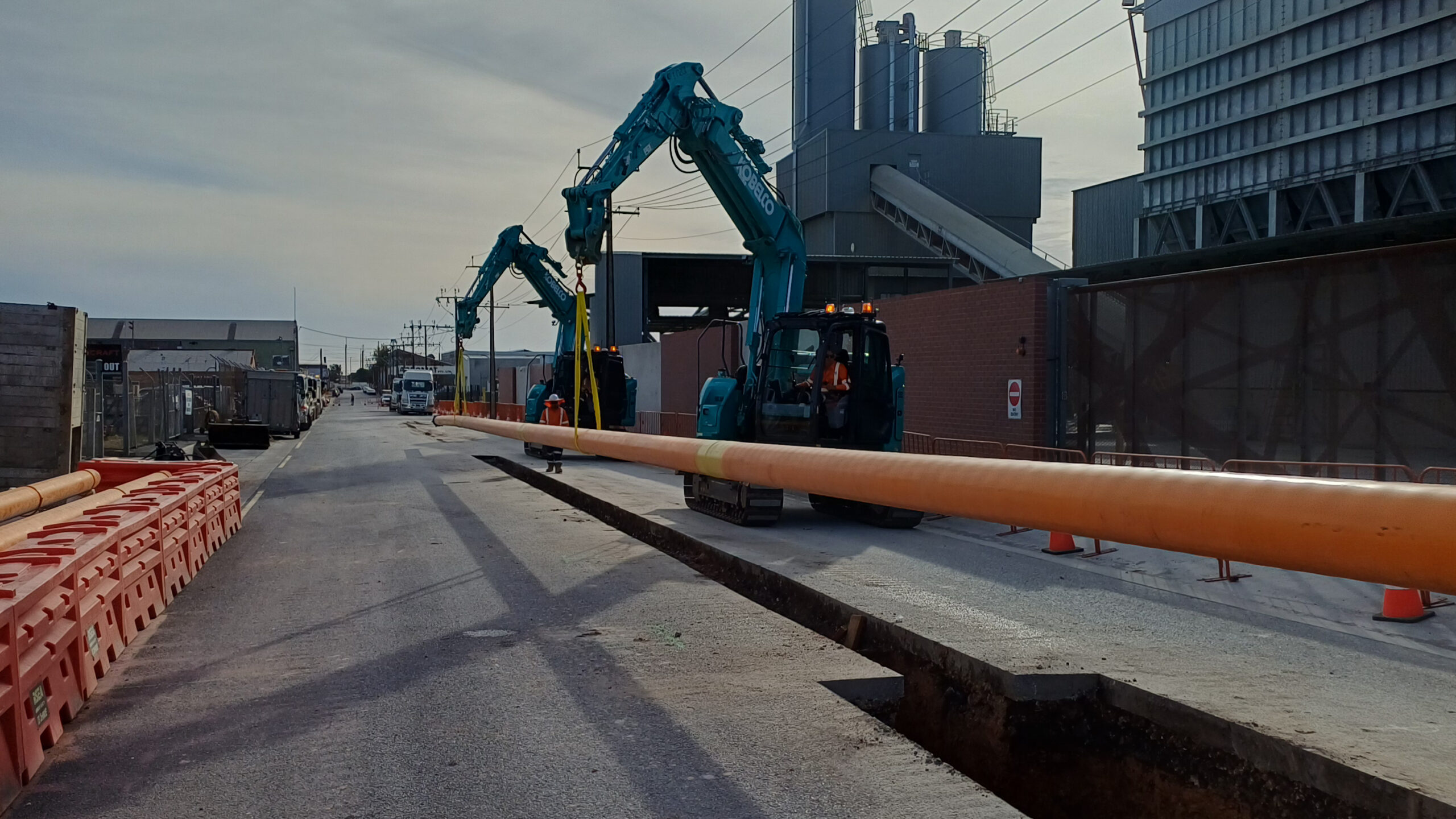
At Maungawhau Station, diversion of the Huia 2 transmission watermain sat on the critical path for retrieving the tunnel boring machine. Early escalation and close collaboration with Watercare turned a potential programme risk into a managed shutdown window, keeping the tunnel boring machine’s journey on schedule.
Connectivity underground: a first for New Zealand
Downer’s Telecommunications team, working through the Link Alliance, installed coaxial cable, radio frequency cabling and optical fibre to around 300 locations across the three stations, plus around 300 radio units through the stations and a further 50 through the tunnels. Initially commissioned for One NZ, Downer is completing testing and integration to support seamless connectivity for One NZ, Spark and 2degrees customers from street to station, train and tunnel. It is understood to be the largest multi-operator Distributed Antenna System built in New Zealand.
Built digitally first
City Rail Link was New Zealand’s first major infrastructure project to fully commit to Building Information Modelling as a core way of working. Downer’s Digital Engineering team worked alongside the alliance, client, designers and mechanical, electrical and plumbing subcontractors to produce a LOD 400 construction BIM model that supported planning, coordination, installation and handover. The work was recognised with the AEC Excellence Award for Global Infrastructure Design.
The BIM model was regularly updated as the design evolved, with monthly material take-offs used to help track projected carbon impacts against the reference design. The same model also supported 4D construction sequencing, helping teams test staging options, improve coordination and reduce the risk of clashes in a highly complex underground environment.
Safety, sustainability and social outcomes
On a project of this scale and duration, safety, sustainability and social outcomes have been central to Link Alliance’s delivery excellence, sustained across almost a decade of complex underground and urban construction.
The project also set a genuine environmental target and beat it, diverting 94% of construction and demolition waste from landfill, against a 90% goal.
City Rail Link Ltd fostered a partnership relationship with mana whenua and iwi across Tāmaki Makaurau through the CRL Mana Whenua Forum. This enabled Link Alliance to work in partnership with mana whenua and iwi across Tāmaki Makaurau, embedding mātauranga Māori, whakapapa and local narratives into station naming, identity, artwork and urban design.
In the finished station fit-outs, delivered by Hawkins and other subcontractors, those narratives are expressed through breathtaking architectural finishes and public-facing spaces.
Supplier diversity and social procurement were also key priorities, with significant investment directed to Māori and Pasifika businesses and local supply chains.
The project has developed the next generation of infrastructure professionals. Across Downer’s 10-years delivering the City Rail Link, Downer people have grown their skills, gained experience and built careers on one of the country’s most complex transport projects.
Supporting the asset beyond opening day
Downer’s involvement continues beyond construction. Through a 30-year maintenance role for Auckland Transport, Downer will help keep the new stations and infrastructure safe, reliable and ready for Aucklanders, including asset management, hard maintenance services, cleaning and pest control.
It is a whole-of-life contribution that brings together rail, civil infrastructure, telecommunications, facilities management, asset management, digital engineering and operations capability. It is Downer’s breadth of expertise, applied to one of the country’s most complex and significant infrastructure projects which has delivered excellence for Aucklanders.
“What I’m most proud of isn’t just what’s been delivered. It’s the people behind the project — the thousands of people who showed up, day after day, for a decade.”