

Background
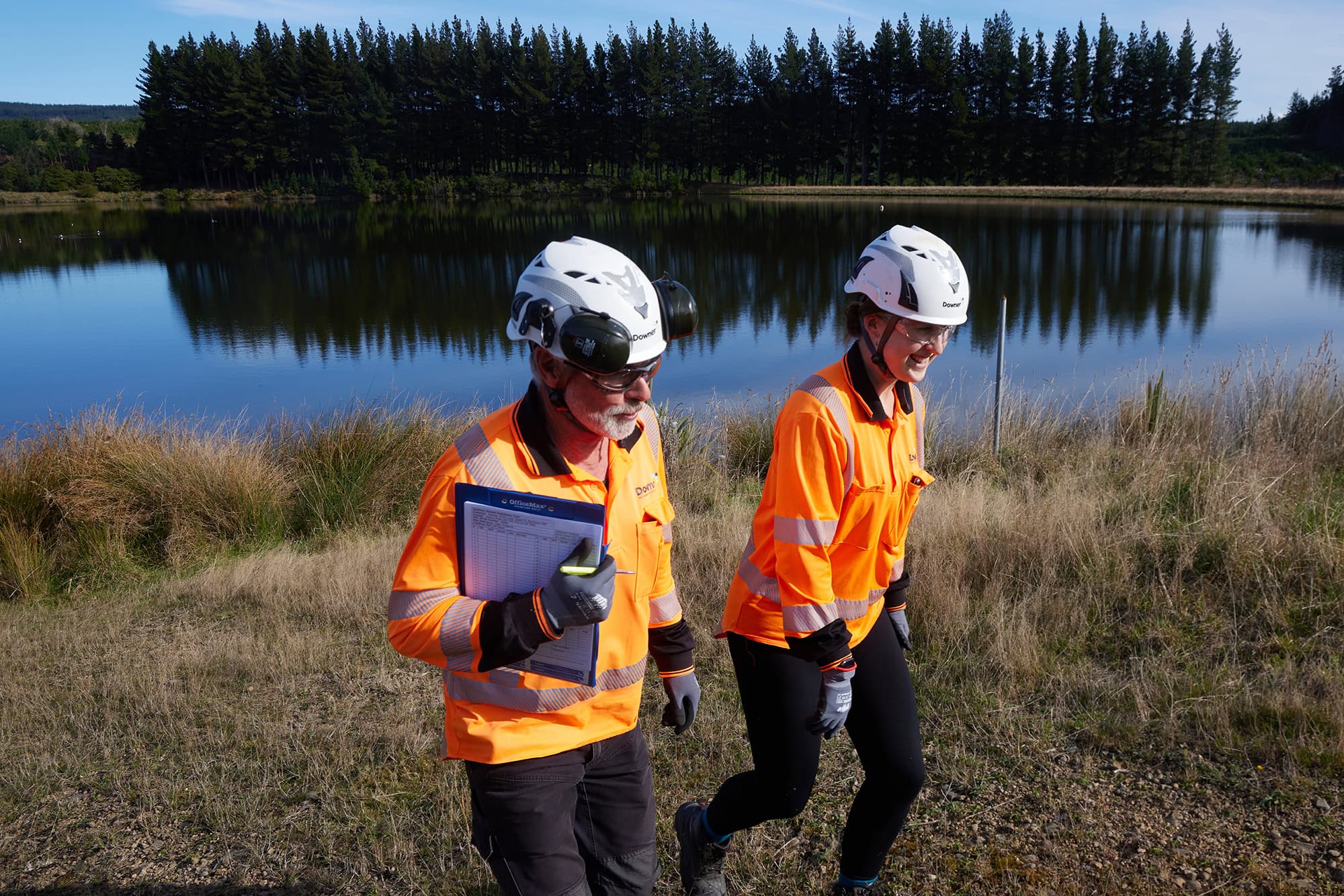
Downer Water NZ is committed to helping communities thrive through education, engagement, and investment in future generations. Recognising the importance of building awareness around water services and sustainability, the team developed and delivered a school engagement programme across the Queenstown Lakes District, Taupo and Nelson.
The programme was designed to provide students with practical, hands-on learning experiences that improve understanding of water, wastewater, and stormwater services while inspiring interest in future careers within the water industry.
Challenge
Water infrastructure plays a vital role in community wellbeing, yet many young people have limited understanding of how water services operate and the skills required to maintain them. The challenge was to create an engaging education programme that would:
- Support local schools and curriculum outcomes.
- Increase awareness of water and environmental stewardship.
- Provide meaningful learning experiences for students.
- Connect young people with real-world science, technology, and infrastructure careers.
- Deliver lasting value for communities.
Approach
Using a value-add thinking approach, the team looked for opportunities to maximise the community benefit of existing resources, equipment, and technical expertise.
Rather than creating separate educational materials from scratch, operational knowledge and equipment were incorporated into interactive learning experiences that brought water infrastructure to life for students.
Primary School Water Education Programme
Three primary schools participated in the programme, reaching approximately 680 students aged between 5 and 10 years.
The sessions combined presentations with hands-on activities, including:
Jetter Truck Demonstration
Students explored a jetter truck and learned how it is used to maintain water and wastewater networks by clearing blockages and cleaning pipes.
CCTV Inspection Activity
Students operated a wheeled CCTV camera and gained an understanding of how technology is used to inspect underground infrastructure and identify issues before they become larger problems.
Hands-on Science Experiments
Students participated in practical experiments exploring:
- Buoyancy in freshwater and saltwater.
- Water clarity (turbidity) testing.
- Chlorine testing using field equipment.
These activities helped students understand the science behind water treatment and environmental monitoring.
Outcomes
The programme delivered positive outcomes for students, schools, and the wider community.
Supporting Education
The interactive activities helped students connect classroom learning to real-world applications of science, engineering, and environmental management.
Building Community Awareness
Students gained a greater understanding of how essential water services operate and the role they play in protecting public health and the environment.
Responding to Community Needs
Feedback from participating schools was overwhelmingly positive.
As a result:
- Five additional schools expressed interest in participating.
- Three schools requested ongoing engagement throughout the year.
- Opportunities were identified to develop curriculum-aligned projects and learning activities that support long-term educational outcomes. A careers expo is planned for a high school in Queenstown in August.
Creating Long-Term Value
The strong response highlighted the value of ongoing partnerships between local schools and industry, creating opportunities to continue supporting education while increasing awareness of sustainable water management.
Discover more View all
Riverina Redevelopment Program
Project Overview The Riverina Redevelopment Program (RRP) is a transformative...
Read case study

HV/LV Network Upgrade
Read case study

Christchurch Southern Motorway Stage 2
Connecting Canterbury through safer, more reliable transport infrastructure Overview Christchurch...
Read case study