
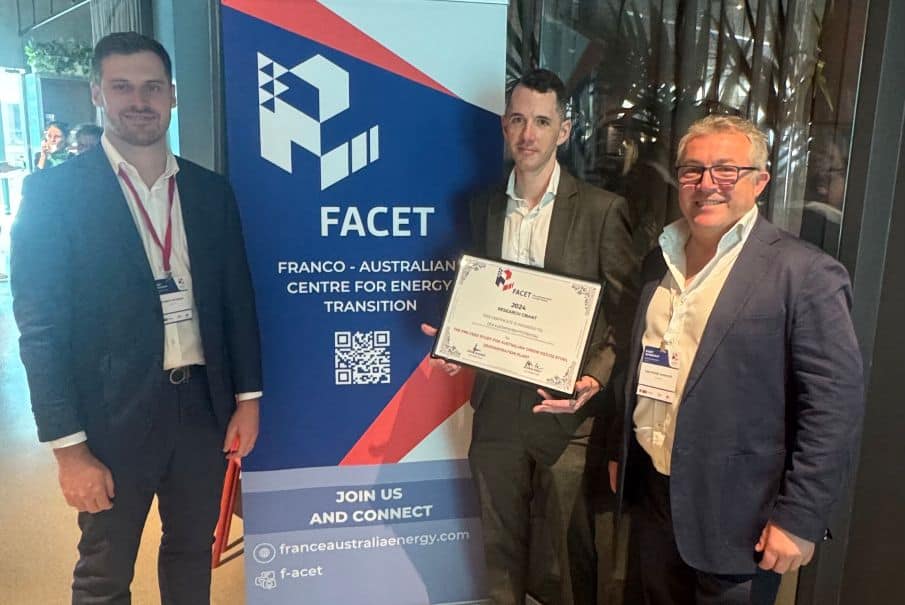
Downer is pleased to be collaborating with the Franco-Australian Centre for Energy Transition (FACET) on a pre-FEED (front-end engineering design) study to progress the construction of a commercial-scale demonstration plant in Australia, which will produce synthetic fuels (eFuels) for the maritime and aviation sectors.
Overview
Enabling communities to thrive means taking bold steps toward a cleaner, more resilient future.
In collaboration with the Franco-Australian Centre for Energy Transition (FACET), Downer is supporting the development of a commercial-scale demonstration plant to produce synthetic fuels (eFuels) for the aviation and maritime sectors — an initiative focused on practical, scalable solutions to help industries decarbonise and remain future-fit.
Bringing Expertise Together
This eight-month pre-FEED (Front-End Engineering Design) study brings together leading minds from research and industry, including CEA (French Alternative Energies and Atomic Energy Commission), H2Potential and 16 global ‘First Movers’ such as Airbus, CMA CGM and Air Liquide.
At the heart of the project is a shared ambition: accelerating practical solutions for decarbonisation. The study will draw on Downer’s deep experience in Australia’s industrial and power generation landscape, applying proven capability in solution architecture and asset management to help shape the conceptual design for the plant.
Announced at FACET’s inaugural Energy Transition Symposium in October 2024, the partnership highlights what’s possible when international cooperation meets local delivery. It’s a step forward in creating clean fuel alternatives — and a powerful example of collective action in response to climate.
About FACET
The Franco-Australian Centre for Energy Transition (FACET) is dedicated to strengthening the bilateral relationship between Australia and France through deep collaboration in research, innovation, education, and training to drive the advancement of sustainable and net-zero energy initiatives.
FACET aims to promote the wider adoption of sustainable energy solutions, bolster multilateral collaborations, and enhance education and training to drive a proactive climate change response agenda.