
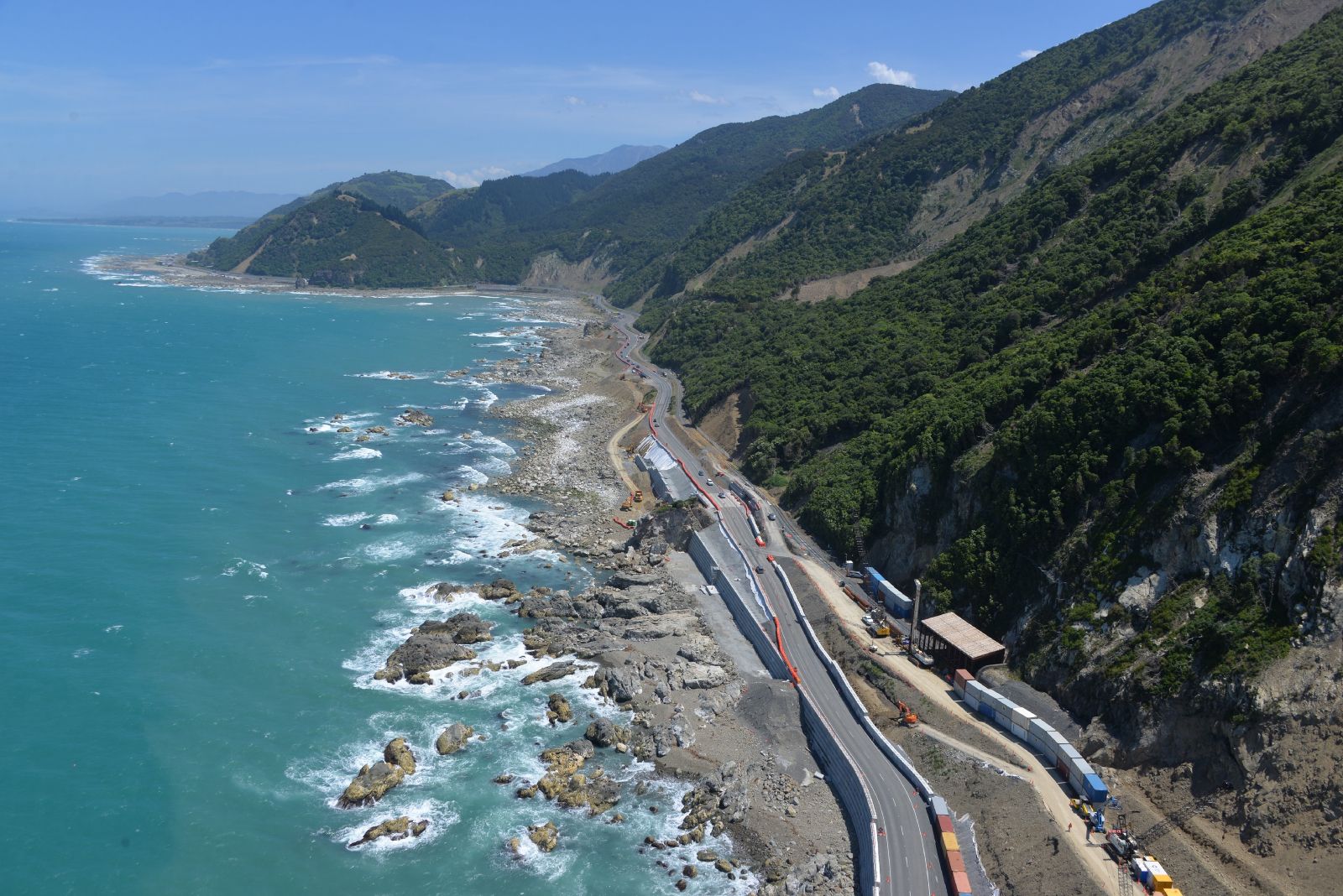
Reconnecting communities after the Kaikōura earthquake
Overview
Following the 7.8-magnitude Kaikōura earthquake in November 2016, one of New Zealand’s most important transport corridors was severely damaged. State Highway 1 and the Main North Line railway between Picton and Christchurch were closed by widespread slips, damaged structures, uplifted coastline and destabilised slopes.
The North Canterbury Transport Infrastructure Recovery (NCTIR) Alliance was established in December 2016 to restore road and rail access along the east coast of the South Island. The alliance brought Downer together with Waka Kotahi NZ Transport Agency, KiwiRail, Fulton Hogan, HEB Construction and Higgins to repair, rebuild and improve the earthquake-damaged transport network.
As an alliance partner, Downer contributed major civil construction, earthworks, rail-interface, traffic management, coastal protection, stakeholder engagement and programme delivery capability to one of the most urgent and complex infrastructure recovery programmes undertaken in Aotearoa New Zealand.
Downer’s contribution
Downer worked as part of the NCTIR Alliance delivery team, bringing practical construction expertise, local and national resources, experienced project leadership and specialist capability across road, rail and coastal infrastructure.
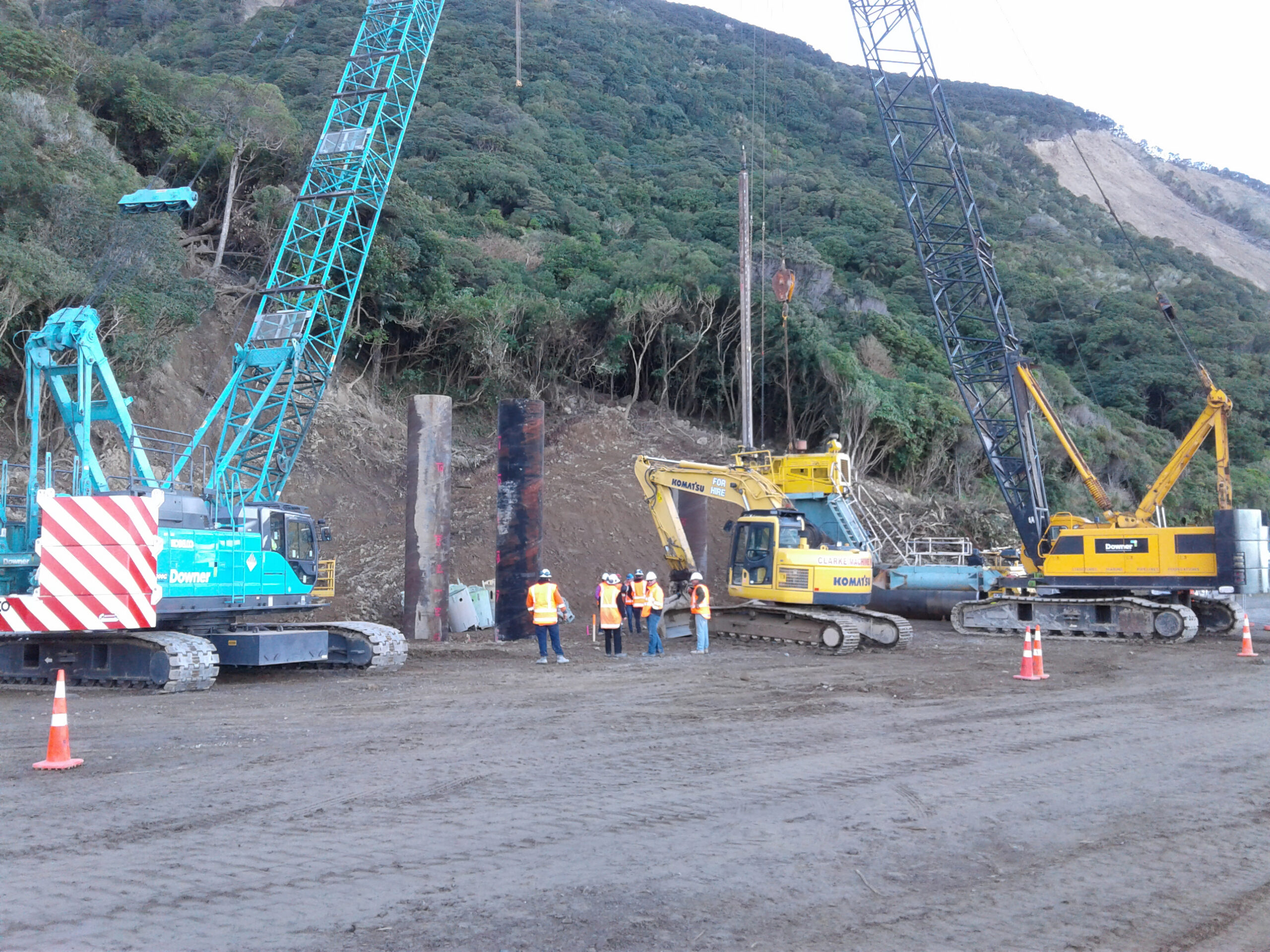
Downer’s contribution included slip clearance, earthworks, highway reconstruction, railway construction and realignment, seawall and retaining wall construction, temporary traffic management and work in constrained road and rail corridors. Large portions of the work were undertaken alongside or within the railway corridor, requiring detailed planning with KiwiRail, rail-specific safety controls, protection arrangements and tightly controlled work windows.
A key example of Downer’s contribution was Slip 29a, a $10.6 million project involving rail realignment, large-diameter stormwater installation, rockfall protection structures, fibre and power installation, reclamation and coastal works. The Downer delivery team managed complex construction in a narrow corridor where rail rules, tidal windows, slope instability, temporary access and live network requirements had to be carefully integrated.
Downer also supported the wider alliance culture of collaboration, innovation and disciplined delivery. The programme demanded fast decisions, practical engineering and constant coordination across work sites. Downer’s teams helped develop and apply methods that balanced speed, safety, quality, environmental management and community impact.
Outcome and lasting impact
The NCTIR programme reconnected Kaikōura, restored a nationally significant freight and tourism route, and rebuilt the road and rail corridor with greater resilience. The reopening of transport links was critical to regional recovery, helping communities, businesses, farms and the tourism sector regain access to markets, visitors and essential services.
The alliance model enabled a rapid, integrated response to a complex recovery environment. Design and construction progressed in parallel, work sites were coordinated across a long and constrained corridor, and delivery teams were able to respond quickly as ground conditions, weather and risk profiles changed.
Downer’s ability to mobilise at scale, work collaboratively, and deliver complex infrastructure in some of New Zealand’s most challenging terrain enabled NCTIR’s outcomes.
Discover more View all
Riverina Redevelopment Program
Project Overview The Riverina Redevelopment Program (RRP) is a transformative...
Read case study

HV/LV Network Upgrade
Read case study

Christchurch Southern Motorway Stage 2
Connecting Canterbury through safer, more reliable transport infrastructure Overview Christchurch...
Read case study